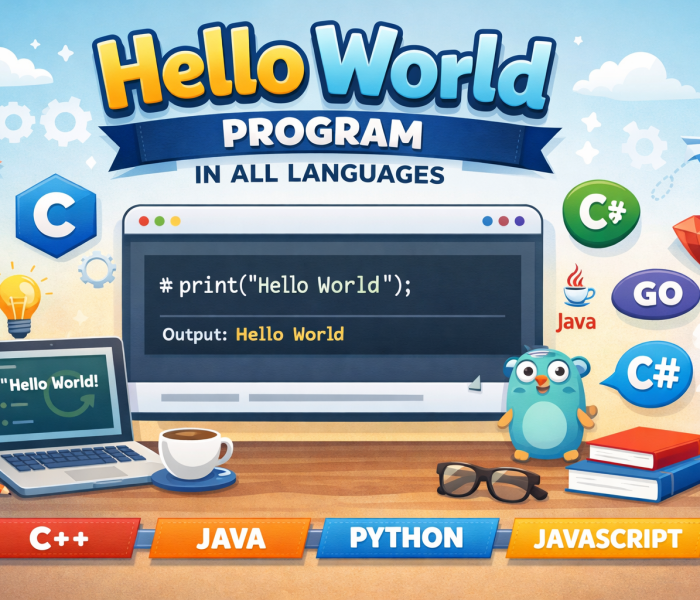
Hello World Program
The Hello World program is the very first step in learning any programming language.
It teaches you how to display output, understand basic syntax, and verify that your programming environment is working correctly.
On this page, you will learn how to print “Hello World” in all major programming languages, along with clear explanations for each language.
📌 Why Is Hello World Important?
It is the first program written by every programmer
Helps verify compiler/interpreter setup
Teaches basic program structure
Builds confidence for beginners
Works the same logic across all languages
#include <stdio.h>

int main() {
    printf("Hello World");
    return 0;
}
#include <iostream>
using namespace std;

int main() {
    cout << "Hello World";
    return 0;
}
class HelloWorld {
    public static void main(String[] args) {
        System.out.println("Hello World");
    }
}
print("Hello World")
🖨️ Expected Output
Hello World
Hello World
Conclusion :
The Hello World program is the first step in learning any programming language. Even though the syntax changes from one language to another, the main goal remains the same — displaying output on the screen.
By practicing this program in multiple programming languages, beginners can understand basic program structure, output statements, and syntax differences more easily. This strong foundation helps in learning advanced concepts like variables, loops, conditions, and functions.
Once you are comfortable with the Hello World program, try modifying it by printing multiple lines or taking user input. These small steps will build confidence and make your programming journey smoother.
